Best Car Drying Towel
Last updated August 5, 2026 · By Mike Turner — reviewed hands-on
Disclosure: Some links below are affiliate links. If you buy through them, we may earn a small
commission at no extra cost to you. As an Amazon Associate, we earn from qualifying purchases. We only
recommend gear we'd actually put in a beginner's hands.
Drying is the last thing you do in a wash, which is exactly why it's the step people cut corners on — and
exactly why it's a common source of swirl marks on a car that was otherwise washed carefully. The towel
that touches wet paint last matters as much as the mitt that touched it first.
We picked these by real absorbency (how many passes it actually takes to dry a panel) and weave — not
“super absorbent” marketing copy that every listing uses regardless of whether it's true.
Quick answer: for most people, The Rag Company Dry Me a River is the one to buy — a large,
waffle-weave towel that dries a full car in a handful of passes. If you want something cheaper that still
performs well, the Chemical Guys Miracle Dryer Absorber is the value pick.
Why a dedicated drying towel matters
Water left to air-dry on paint leaves mineral spots that etch into the clear coat over time, especially in
hard water areas — so you need to actively dry the car, not just let it evaporate. The problem is what most
people reach for: a regular bath towel or an old t-shirt. Both have relatively coarse, short fibers that
drag across the paint as they absorb water, adding the exact same kind of fine scratches a bad wash mitt
does — just at the very end of the process, after all the careful washing that came before it.
A proper drying towel uses long, soft microfiber fibers (usually a waffle-weave or twist-pile construction)
that absorb far more water per pass while gliding across the surface instead of dragging.
What to look for
Size. Bigger is genuinely better here — a large towel (28×36 inches or larger) covers more surface per
pass, meaning fewer total passes and less overall contact with the paint.
Weave and absorbency. Waffle-weave increases surface area for absorbency; twist-pile is plusher and
also absorbs well. Either works — what matters is genuine absorbency, which is hard to fake in reviews, so
check what real buyers say about how many passes it takes on an average car.
Edgeless construction. Same logic as any towel touching paint — a stitched edge dragged under pressure
can mar the surface. Edgeless removes that risk.
GSM. Drying towels benefit from being on the higher end (500+ GSM) since maximum absorbency in fewer
passes is the entire point.
The best car drying towels
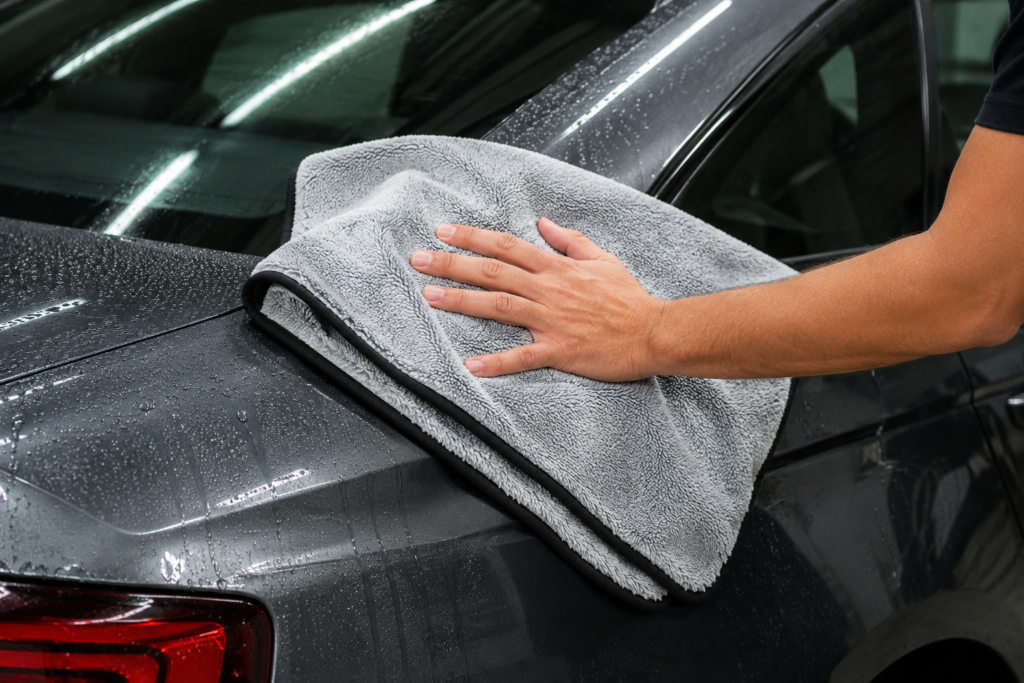
Best overall — The Rag Company Dry Me a River
A large waffle-weave towel built specifically for drying, not repurposed from a general wipe-down towel
line. The size and weave combination means most cars dry in a handful of passes rather than a dozen.
- Best for: most people, most vehicles
- Why it wins: genuinely high absorbency at a size that covers real ground per pass.
- Watch-outs: it's a premium price for a single towel — worth it if you're drying regularly.
Owner reviews consistently cite the same thing: fewer total passes than a standard towel to fully dry a
panel, which is exactly what the larger waffle-weave format is designed to deliver.
👉 Check current price: The Rag Company Dry Me a River
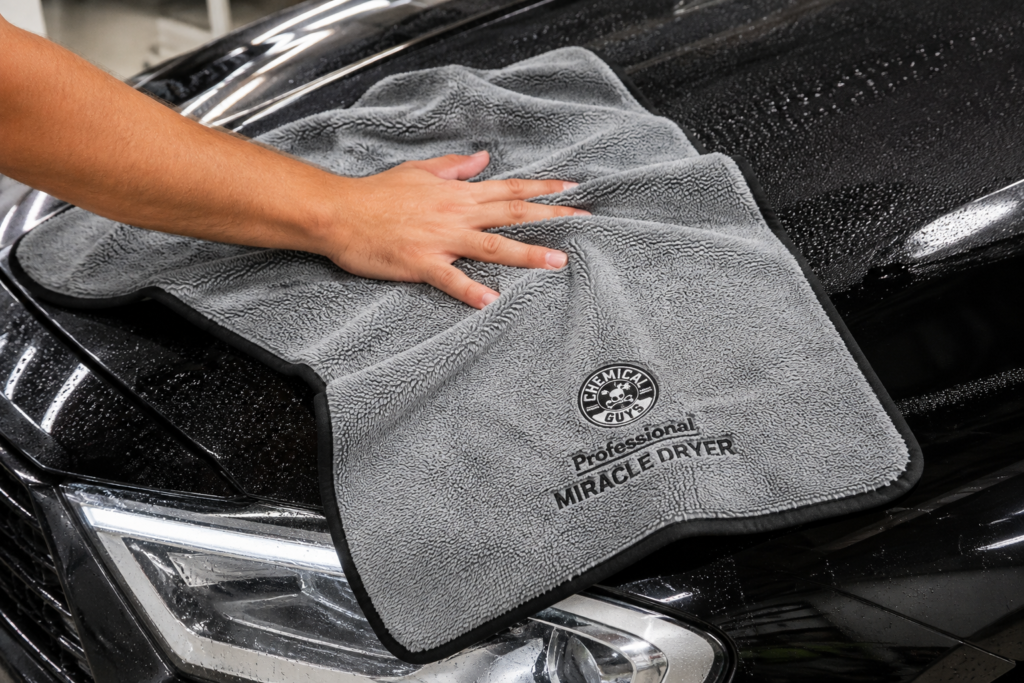
Best value — Chemical Guys Miracle Dryer Absorber
A more affordable drying towel that still delivers real absorbency, made from a synthetic chamois-style
material rather than traditional microfiber. A sensible pick if you want solid performance without the
premium price of a dedicated waffle-weave towel.
- Best for: good drying performance on a tighter budget
- Why it wins: strong absorbency-to-price ratio.
- Watch-outs: synthetic chamois materials can feel different in hand than microfiber — check current
reviews for texture preferences before buying.
The synthetic chamois texture divides opinion in reviews — some prefer it over microfiber, others don't —
but the absorbency numbers hold up well against the price, which is why it keeps showing up as a value
recommendation.
👉 Check current price: Chemical Guys Miracle Dryer Absorber
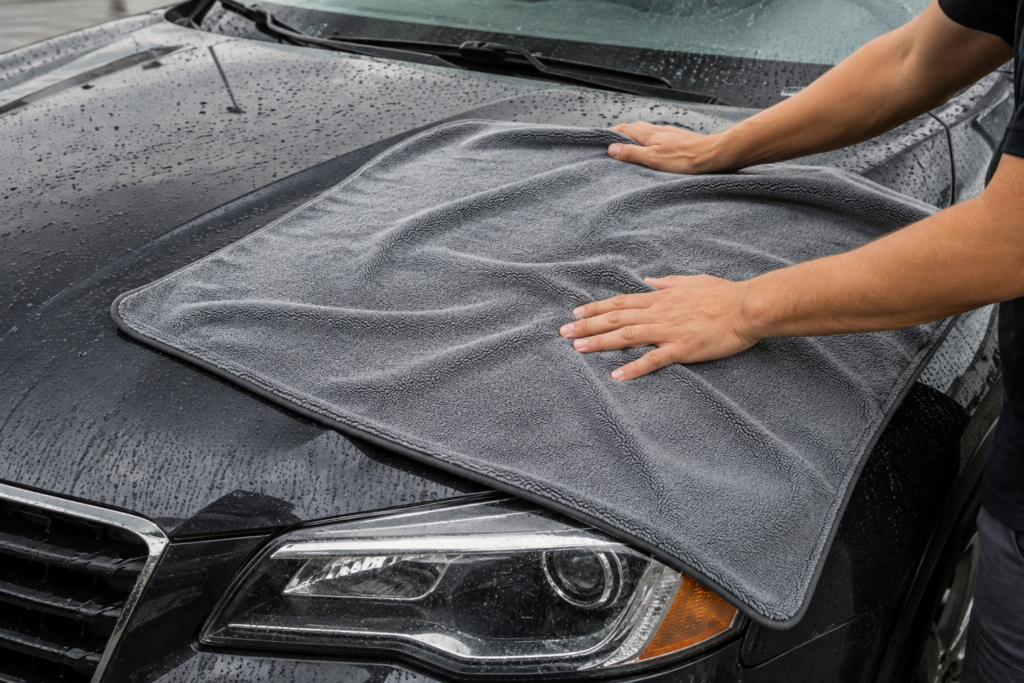
Best budget — a large generic microfiber drying towel
Amazon carries several inexpensive, large-format microfiber drying towels under specialty and generic
brands, typically under $20. They won't match the absorbency of a premium waffle-weave towel, but they're a
legitimate upgrade over a bath towel while you decide if you want to invest more.
- Best for: an immediate upgrade from a bath towel without a big spend
- Why it wins: low-risk way to stop using the wrong towel today.
- Watch-outs: check current reviews for genuine microfiber construction — quality varies a lot at this
price point, and expect more passes needed than the premium picks.
Treat any specific budget listing as an upgrade-from-a-bath-towel step, not a long-term drying solution —
read recent reviews for the exact product before ordering, since quality varies more at this price tier.
👉 Check current price: Large Microfiber Drying Towel
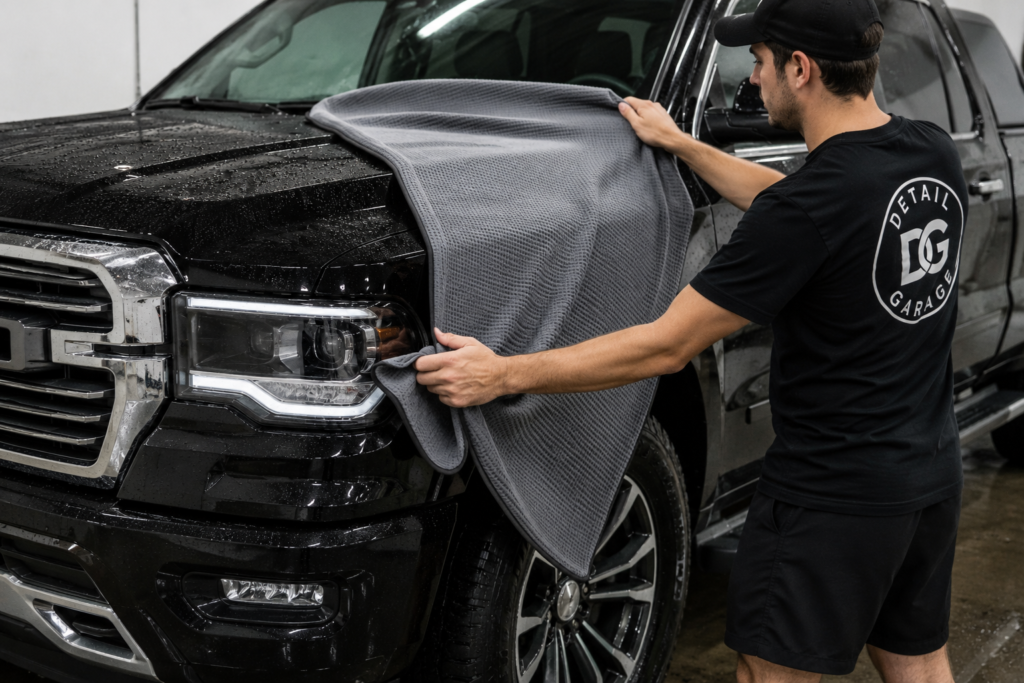
Best for large vehicles — an XL waffle-weave towel
Trucks, SUVs, and vans have enough extra surface area that an XL-sized version of a waffle-weave drying
towel (sized up from the standard Dry Me a River line) noticeably cuts down on total pass count.
- Best for: trucks, SUVs, vans, or anyone drying multiple vehicles
- Why it wins: more coverage per pass on genuinely large surfaces.
- Watch-outs: a bigger towel is heavier when saturated — fine for most people, but worth knowing before
buying if hand fatigue is a concern.
For anyone drying a truck or SUV regularly, the extra surface area of an XL towel consistently comes up in
reviews as the difference between a quick dry and a multi-towel ordeal.
👉 Check current price: XL Waffle-Weave Drying Towel
Best drying aid to pair with any towel — a quick detail spray
A spray-on drying aid or quick detail spray, misted onto the panel before you dry, adds lubrication that
reduces friction between the towel and the paint — a meaningful safety margin on top of a good towel, not
a replacement for one.
- Best for: pairing with any of the towels above for extra safety margin
- Why it wins: reduces friction during the one step most likely to mar paint if done dry.
- Watch-outs: it's a supplement to a good towel, not a substitute for one.
👉 Check current price: Quick Detail Spray
Comparison at a glance
| Pick | Material | Best for | Price tier |
|---|---|---|---|
| The Rag Company Dry Me a River | Waffle-weave microfiber | Best overall | $$$ |
| Chemical Guys Miracle Dryer Absorber | Synthetic chamois | Best value | $$ |
| Generic large microfiber towel | Microfiber | Budget upgrade | $ |
| XL waffle-weave towel | Waffle-weave microfiber | Large vehicles | $$$ |
Verify current sizes and prices before publishing — drying towel lines get resized and rebundled often.
Why not a chamois or a leaf blower?
Traditional chamois (real or synthetic leather-style) can work, but tends to have less give than
microfiber and, on synthetic versions, has a rougher feel that some detailers avoid on freshly corrected
paint. Leaf blowers or dedicated car dryers are genuinely excellent — they eliminate contact entirely,
which is the safest possible drying method — but they're a bigger investment and a separate purchase from a
towel. A quality drying towel is the right starting point either way, since you'll still want one for
crevices, mirrors, and door jambs even if you add a blower later.
How to dry a car correctly
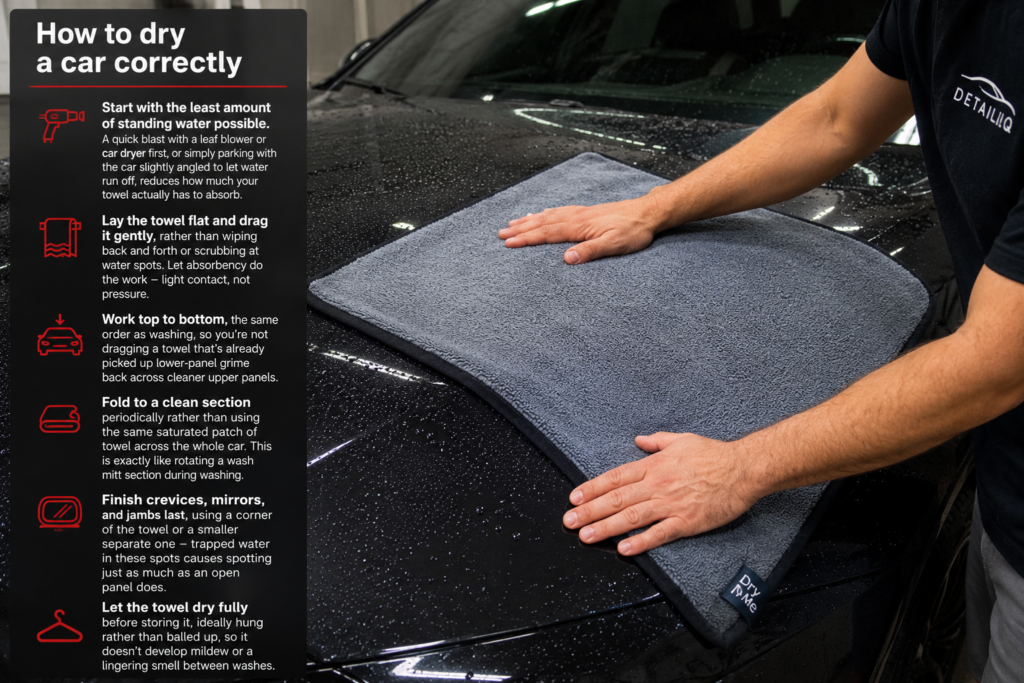
The towel matters, but technique still determines whether you get scratch-free results:
- Start with the least amount of standing water possible. A quick blast with a leaf blower or car
dryer first, or simply parking with the car slightly angled to let water run off, reduces how much your
towel actually has to absorb. - Lay the towel flat and drag it gently, rather than wiping back and forth or scrubbing at water
spots. Let absorbency do the work — light contact, not pressure. - Work top to bottom, the same order as washing, so you're not dragging a towel that's already picked
up lower-panel grime back across cleaner upper panels. - Fold to a clean section periodically rather than using the same saturated patch of towel across the
whole car. This is exactly like rotating a wash mitt section during washing. - Finish crevices, mirrors, and jambs last, using a corner of the towel or a smaller separate one —
trapped water in these spots causes spotting just as much as an open panel does. - Let the towel dry fully before storing it, ideally hung rather than balled up, so it doesn't develop
mildew or a lingering smell between washes.
Caring for your drying towel
- Wash separately from regular laundry, same as any microfiber — lint contamination reduces absorbency
over time. - No fabric softener. It coats the fibers and actually reduces how much water the towel can hold,
working directly against the one thing you bought it for. - Retire it once absorbency noticeably drops, even if it still looks fine — a drying towel that's lost
its water-holding capacity just means more passes and more contact with the paint to get the same result.
Mistakes that make drying risky
- Wiping instead of blotting/dragging gently. Aggressive wiping motions, even with a good towel, add
unnecessary friction. Let the towel's absorbency do the work with light contact. - Using one towel for the whole car without rinsing it out. A towel gets progressively more saturated
and picks up more residual grit as you go — for a full car, having two drying towels in rotation helps. - Drying in direct sun. Water evaporates and spots faster than you can dry, working against you the
whole time. - Skipping panels like door jambs and mirrors because they're annoying to reach — trapped water there
still causes spotting.
FAQ
Can I just let my car air dry instead?
Not without consequences — water left to evaporate on its own typically leaves mineral spots, especially in
hard water areas, that can etch into the clear coat over time if left repeatedly.
How many drying towels do I actually need?
At least two in rotation for a full car — one gets saturated partway through, and switching to a second
keeps drying efficient rather than pushing a fully soaked towel across the rest of the panels.
Is a chamois better or worse than microfiber for drying?
Neither is strictly better — microfiber (especially waffle-weave) tends to be gentler and more forgiving,
while chamois-style synthetics can offer strong absorbency at a lower price. Check current reviews for
texture and performance specifics.
Does towel size actually matter that much?
Yes — a larger towel covers more surface per pass, meaning fewer total passes and less cumulative contact
with the paint to dry the same car.
Should I use a detail spray every time I dry the car?
It's not required, but it adds a meaningful friction-reduction safety margin, especially useful on
freshly corrected or ceramic-coated paint where you want to minimize any risk of marring.
The bottom line
A dedicated drying towel isn't optional if you care about avoiding swirl marks — the drying step is just as
capable of adding scratches as washing is. For most people, The Rag Company Dry Me a River is worth the
premium price; if budget is tight, the Chemical Guys Miracle Dryer Absorber or a generic large
microfiber towel is a real upgrade over a bath towel starting today.
New to the whole process? Start with
Car Detailing for Beginners: Where to Start.