Best Car Wax 2026
Last updated August 6, 2026 · By Mike Turner — reviewed hands-on
Disclosure: Some links below are affiliate links. If you buy through them, we may earn a small
commission at no extra cost to you. As an Amazon Associate, we earn from qualifying purchases. We only
recommend gear we'd actually put in a beginner's hands.
Wax is the most emotional purchase in detailing — everyone wants the deepest, warmest shine — and also the
most misunderstood. It's a sacrificial layer, not a permanent one: it protects your clear coat and looks
good doing it, but it wears off over weeks to a few months, not years. Picking the right one is about
matching durability and ease of use to how often you're actually willing to reapply it.
We picked these by application ease, realistic durability, and value — not by how the beading looks in a
thirty-second video.
Quick answer: for most beginners, Meguiar's Gold Class Carnauba Wax is the easy, forgiving choice —
simple to apply by hand or machine, reliable results. If you want a faster, spray-friendly option, the
Chemical Guys Butter Wet Wax is worth the switch.
What wax actually does (and doesn't do)
Wax sits on top of your clear coat as a sacrificial protective layer — it takes the brunt of UV exposure,
light contamination, and minor environmental damage so your clear coat doesn't have to, and it makes the
surface more hydrophobic in the process. It does not fill or hide swirl marks permanently (some waxes
have minor filling properties that temporarily mask light marks, but that's cosmetic, not correction), and
it doesn't last indefinitely — realistic durability for most waxes is 4-8 weeks, less with frequent
washing or harsh weather.
If you haven't corrected your paint yet, wax over existing swirl marks won't fix them — see
How to Remove Swirl Marks first if that's the actual goal.
What to look for
Application method that matches your patience. Paste waxes generally last a bit longer but take more
effort to apply and buff; liquid and spray waxes go on faster and are easier for beginners, often at a
small durability tradeoff.
Realistic durability claims. Be skeptical of any wax claiming many months of protection — most
carnauba and synthetic wax blends realistically last 4-8 weeks under normal conditions, not longer.
Ease of buffing off. Some waxes haze heavily and take real effort to buff clean; others wipe off with
much less effort. This matters more than beginners expect on a full car.
Carnauba vs. synthetic vs. hybrid. Natural carnauba wax is prized for a warm, deep look; synthetic
waxes (sometimes called paint sealants when synthetic-only) often last a bit longer; many popular products
are hybrid blends aiming for both.
The best car waxes for 2026
Best overall — Meguiar's Gold Class Carnauba Wax
Gold Class has been a beginner-recommended wax for years because it's genuinely forgiving — easy to apply
thin, easy to buff off, with a real carnauba-driven look that doesn't require advanced technique to get
right.
- Best for: first-time wax users and anyone who wants dependable, no-drama results
- Why it wins: consistently easy application and buffing, with results that don't punish beginner
technique. - Watch-outs: verify current formulation — Meguiar's has both paste and liquid versions under similar
naming, confirm which you're buying.
Owner reviews across years consistently describe it as the wax people recommend to someone waxing their
car for the first time — not the flashiest option, but the one least likely to go wrong.
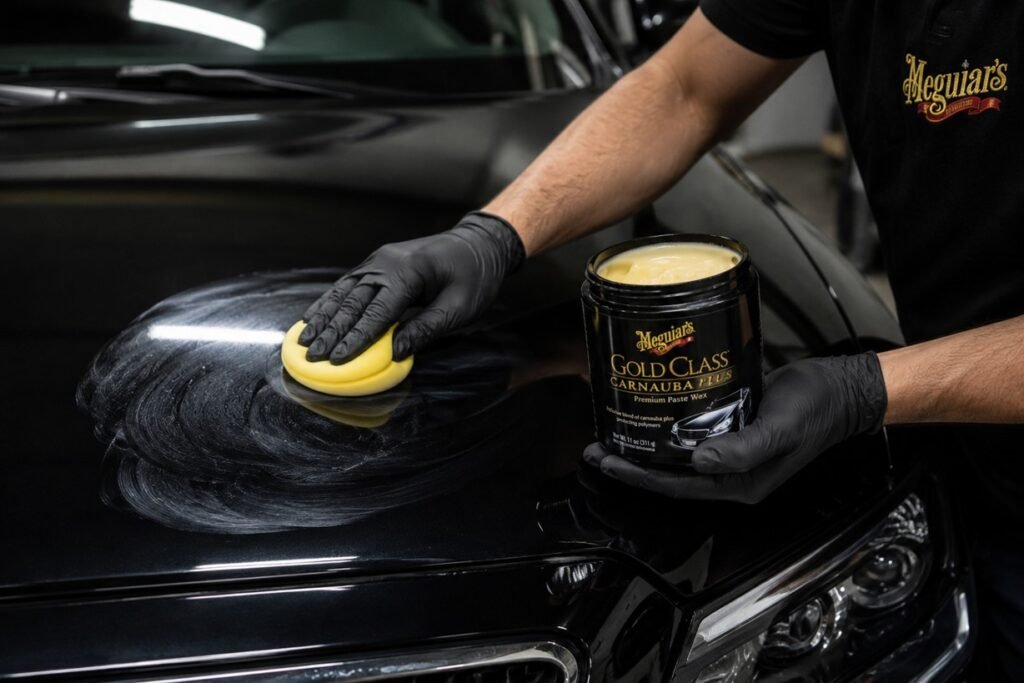
👉 Check current price: Meguiar's Gold Class Carnauba Wax
Best value / fast application — Chemical Guys Butter Wet Wax
Butter Wet Wax is popular specifically because it can be applied wet, panel by panel, without needing to
haze and dry fully before buffing — a real time-saver on a full car, at a reasonable price.
- Best for: buyers who want less total time spent waxing without sacrificing much durability
- Why it wins: genuinely faster application method than a traditional haze-and-buff wax, while staying
affordable. - Watch-outs: the “wet” application technique is different from a standard wax — read the specific
method before your first use.
Reviewers who've switched from a traditional paste wax to this one consistently cite time saved on a full
car as the reason they stuck with it.
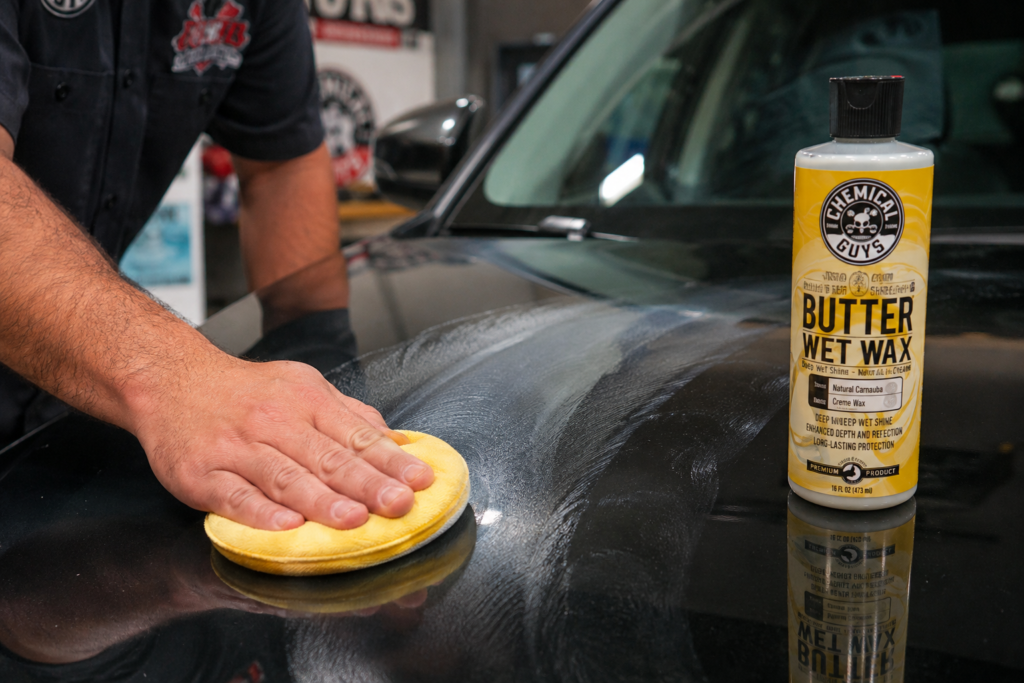
👉 Check current price: Chemical Guys Butter Wet Wax
Best premium / show finish — Griot's Garage Best of Show Wax
For buyers chasing the deepest possible look and willing to pay for it, Griot's Best of Show carries the
brand's reputation for refined, well-formulated products into the wax category.
- Best for: show cars, weekend cruisers, or anyone prioritizing depth of look over cost
- Why it wins: a genuinely premium carnauba-forward formula with a strong reputation among enthusiasts
who care most about final appearance. - Watch-outs: priced well above the budget and mid-tier picks here — durability isn't necessarily
longer, the difference is primarily in the look.
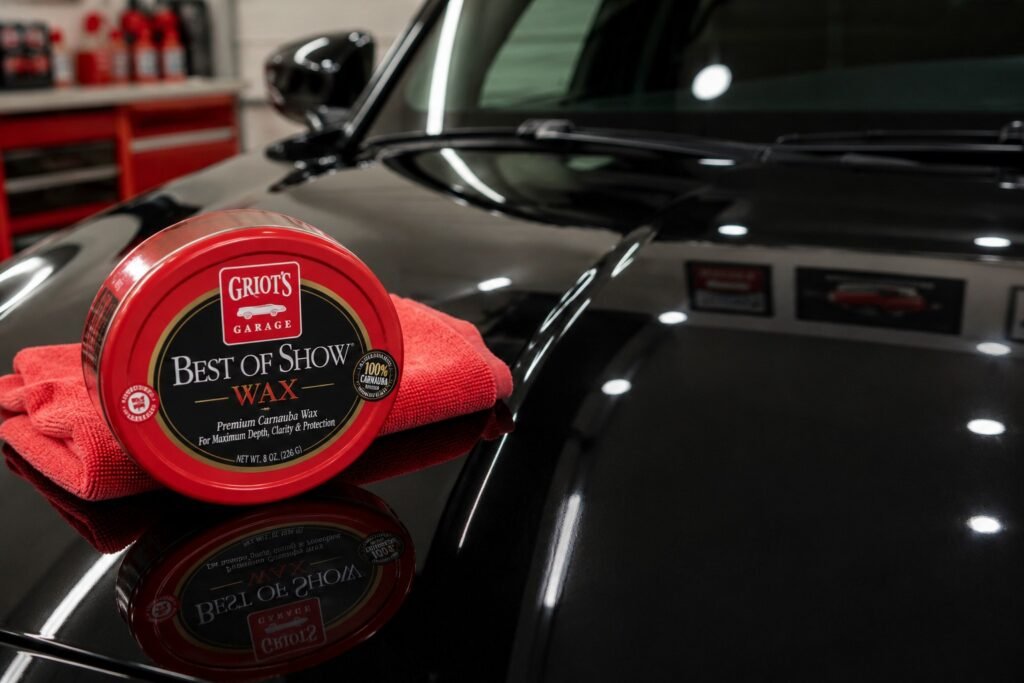
👉 Check current price: Griot's Garage Best of Show Wax
Best long-lasting paste wax — Collinite 845 Insulator Wax
Collinite 845 has a long-standing cult following specifically for durability that outpaces most carnauba
waxes — a synthetic-leaning formula that trades some of the “warmest” carnauba look for meaningfully longer
protection between applications.
- Best for: buyers who want to apply wax less often and are willing to trade a little bit of visual
warmth for it - Why it wins: a well-documented reputation for durability beyond what most competitors claim credibly.
- Watch-outs: it can be harder to buff off than softer waxes, especially in cooler temperatures —
apply and buff in moderate weather for the easiest experience.
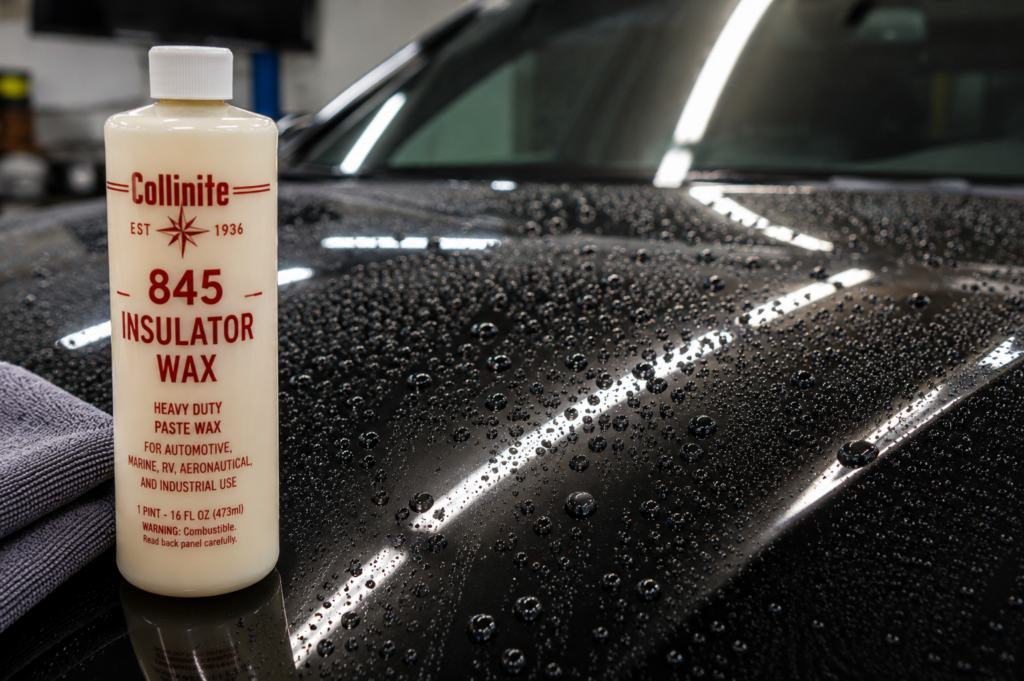
👉 Check current price: Collinite 845 Insulator Wax
Best budget — Turtle Wax Carnauba Wax
You don't need a premium price to get real protection. Turtle Wax's carnauba formula is widely available,
inexpensive, and does the core job — protection and a genuine shine — without the premium branding cost.
- Best for: trying wax for the first time on the smallest possible budget
- Why it wins: low-risk way to learn the application process before investing in a pricier wax.
- Watch-outs: expect to reapply somewhat more often than the premium and long-lasting picks above.
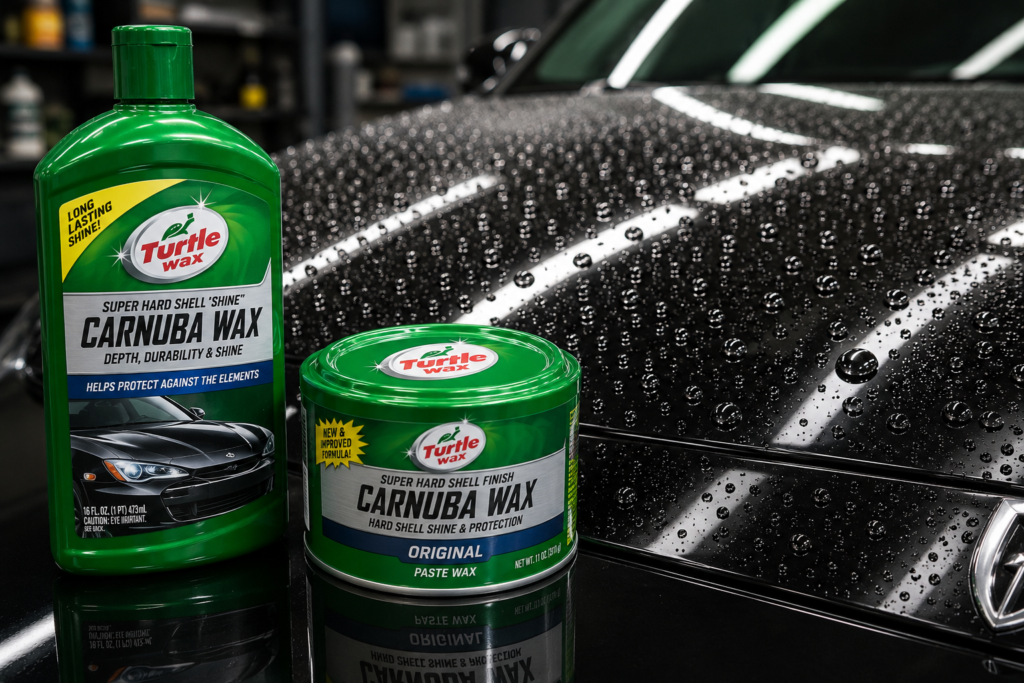
👉 Check current price: Turtle Wax Carnauba Wax
Comparison at a glance
| Wax | Application | Best for | Price tier |
|---|---|---|---|
| Meguiar's Gold Class | Traditional haze-and-buff | Best overall / beginners | $$ |
| Chemical Guys Butter Wet Wax | Wet application, faster | Best value / speed | $$ |
| Griot's Garage Best of Show | Traditional | Premium show finish | $$$ |
| Collinite 845 | Traditional, firmer | Longest durability | $$ |
| Turtle Wax Carnauba | Traditional | Best budget | $ |
Verify current prices and formulations before publishing — wax lines get reformulated and repackaged
periodically.
Wax vs. sealant vs. ceramic: where wax fits
Wax is one of three common protection categories, and it's worth knowing where it sits before you buy.
Paint sealants are synthetic, generally last longer than traditional wax (a few months rather than 4-8
weeks), and are often marketed separately from “wax” even though they do a similar job. Ceramic coatings
are a different category entirely — a longer-term (often multi-year), more involved application that
chemically bonds to the clear coat rather than sitting on top of it like wax. If you're trying to decide
between all three rather than just picking a wax, that's a bigger decision than this page covers — we go
deeper on the tradeoffs in a dedicated comparison.
Seasonal considerations
Summer heat makes wax haze and dry faster, which is part of why working in shade matters more in hot
months — a panel that's too hot can cause uneven buffing and reduced durability. Winter road salt
degrades wax faster than normal conditions, which is a real argument for either more frequent reapplication
during winter or stepping up to a more durable synthetic sealant for that season specifically. Spring
pollen doesn't damage wax directly, but a well-waxed surface sheds pollen more easily during a rinse,
which is one more reason protection pays off before pollen season starts, not after.
How to apply wax correctly
- Start with clean, decontaminated paint — wax applied over dirt or contamination traps it underneath.
See Two-Bucket Wash Method Explained. - Apply a thin, even coat with an applicator pad — more product doesn't mean more protection, just
more effort to buff off. - Work in the shade, never in direct sun or on a hot panel — heat causes wax to haze unevenly and dry
too fast to work with. - Let it haze per the label's instructions (varies by product), then buff off with a clean microfiber
towel. - Reapply on a schedule that matches the product, generally every 4-8 weeks, rather than waiting until
beading visibly stops.
What else you need
Wax is the protection step, not the whole process:
- A finished, corrected surface first — see
How to Remove Swirl Marks if you have visible defects to address
before protecting. - A clean wash routine to maintain it —
Two-Bucket Wash Method Explained and
Best pH-Neutral Car Wash Soap (harsh soap strips wax faster). - The right applicator and buffing towels —
Best Microfiber Towels for Cars.
Mistakes that waste a good wax
- Applying wax over swirl marks expecting correction. Wax protects; it doesn't remove existing
defects — see How to Remove Swirl Marks if that's the actual goal. - Using too much product. A thin coat protects just as well as a thick one and buffs off far easier.
- Waxing in direct sun or on a hot panel. This is one of the most common reasons beginners struggle to
buff wax off cleanly. - Washing with harsh, non-pH-neutral soap afterward. This strips the protection you just applied
faster than it would otherwise wear off. - Assuming a higher price always means longer durability. Some premium waxes are priced for look and
refinement, not necessarily for the longest possible durability — check the specific product's actual
reputation, not just its price tier.
FAQ
How long does car wax actually last?
Realistically 4-8 weeks for most carnauba and synthetic blends under normal conditions — frequent washing,
harsh sun, or winter road salt can shorten that. Products claiming many months of protection should be
treated skeptically.
Is carnauba wax better than synthetic wax?
Neither is universally “better” — carnauba tends to give a warmer, deeper look; synthetic formulas often
last a bit longer. Many popular products blend both to balance the tradeoff.
Can I apply wax by hand, or do I need a machine?
By hand works fine for wax specifically — unlike compound or polish, wax doesn't need machine-level
correction force. A DA polisher on a low speed with an applicator pad just makes it faster and more even
on a full car.
Do I need to wax before or after a ceramic coating?
Wax and ceramic coatings aren't typically layered together — a ceramic coating is a different, longer-term
protection category. If you're planning to apply a coating, that decision affects your protection strategy
more than which wax to buy.
How soon after washing can I apply wax?
Once the car is fully dry — applying wax to a damp surface traps moisture underneath and can cause uneven
results or reduced adhesion.
The bottom line
For most beginners, Meguiar's Gold Class is the forgiving, reliable starting point. If time matters
more than ritual, Chemical Guys Butter Wet Wax cuts real application time. Want to apply less often?
Collinite 845 has the durability reputation to back that up. Whatever you choose, remember wax protects
finished paint — it doesn't correct existing damage, and it needs reapplying on a real schedule, not “when
it looks like it's worn off.”
New to protection entirely? See
Car Detailing for Beginners: Where to Start for the
full process this fits into.